How to Excel at the TEAS Science Section: A 2025 Study Guide
For most nurses of the future, the ATI TEAS science section is the most intimidating part of the entire test. With all its compact content and sneaky questions, it’s easy to get nervous. However, the good news is that it’s not a matter of learning everything for this section; it’s a matter of understanding the fundamentals.
This book will dissect the TEAS science section, telling you precisely what to focus on and the most innovative way to study, so that you can take your worst nightmare and turn it into your highest score.
What’s Really on the TEAS Science Test?

The science section gives you 60 minutes to answer a series of questions in three general subject areas. Understanding this format is the secret to a good study plan.
Human Anatomy and Physiology: This is the most complex and most extensive section. It’s all about the structure and function of the body’s major systems.
Life and Physical Sciences: This checks your general knowledge of biology, chemistry, and general science principles.
Scientific Reasoning: This tests your ability to read information, evaluate experiments, and understand scientific arguments.
The Essential Anatomy & Physiology Concepts You Can’t Ignore
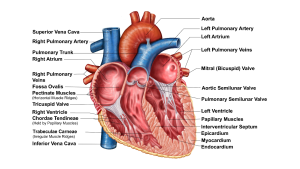
Although you will be somewhat familiar with all 11 body systems, some of them are tested more frequently than others. Prioritize these during your preparation:
Cardiovascular System: Be able to recognize blood circulation across the four chambers of the heart, differentiate between veins and arteries, and identify the composition of the blood.
Respiratory System: Be able to recognize mechanisms of respiration and gas exchange at the alveolar level, then be capable of recognizing how air is transferred from the nose to the lungs.
Nervous System: Understand the difference between the central and the peripheral nervous system, the overall structure of a neuron, and the function of large segments of the brain.
Immune System: Differentiate between innate and adaptive immunity and be aware of the activity of various white blood cells (leukocytes).
Study Strategies That Work for TEAS Science

Reading out of the textbook is not enough. You need active study methods to memorize the details.
Function Focus: Don’t just memorize the names of body structures. For every structure, ask yourself, “What does it do?” and “How does it interact with other systems?” The TEAS isn’t assessing your ability to label a diagram, but your understanding of processes.
Use Graphics: Your brain registers images faster than text. Use flashcards with images, watch educational YouTube videos (such as CrashCourse and Khan Academy), and draw your own pathways and cycles.
Use Mnemonics: Invent silly sentences or acronyms to help you remember complex information. For example, to remember the heart valves, use the mnemonic “Try Pulling My Aorta,” which corresponds to the Tricuspid, Pulmonary, Mitral, and Aortic valves.
Sample Question and Walkthrough
Let’s examine a standard question:
Which of the following is the primary site of nutrient uptake in the digestive system?
- A) Stomach
- B) Small intestine
- C) Large intestine
- D) Oesophagus
Correct Answer: B) Small intestine. Explanation: The Oesophagus is for transport, the stomach is primarily for digestion, utilizing acid, and the large intestine is mainly for water absorption. The small intestine, with its vast surface area due to the presence of villi and microvilli, is specifically designed for absorbing nutrients into the bloodstream.
Key Takeaways
The science portion of the TEAS is a challenging one, but it remains consistent in its difficulty. With your focus narrowed down to high-reward subjects, active learning instead of passive learning, and understanding of the “why” behind every fact, you can conquer the science section. You can do it!
